

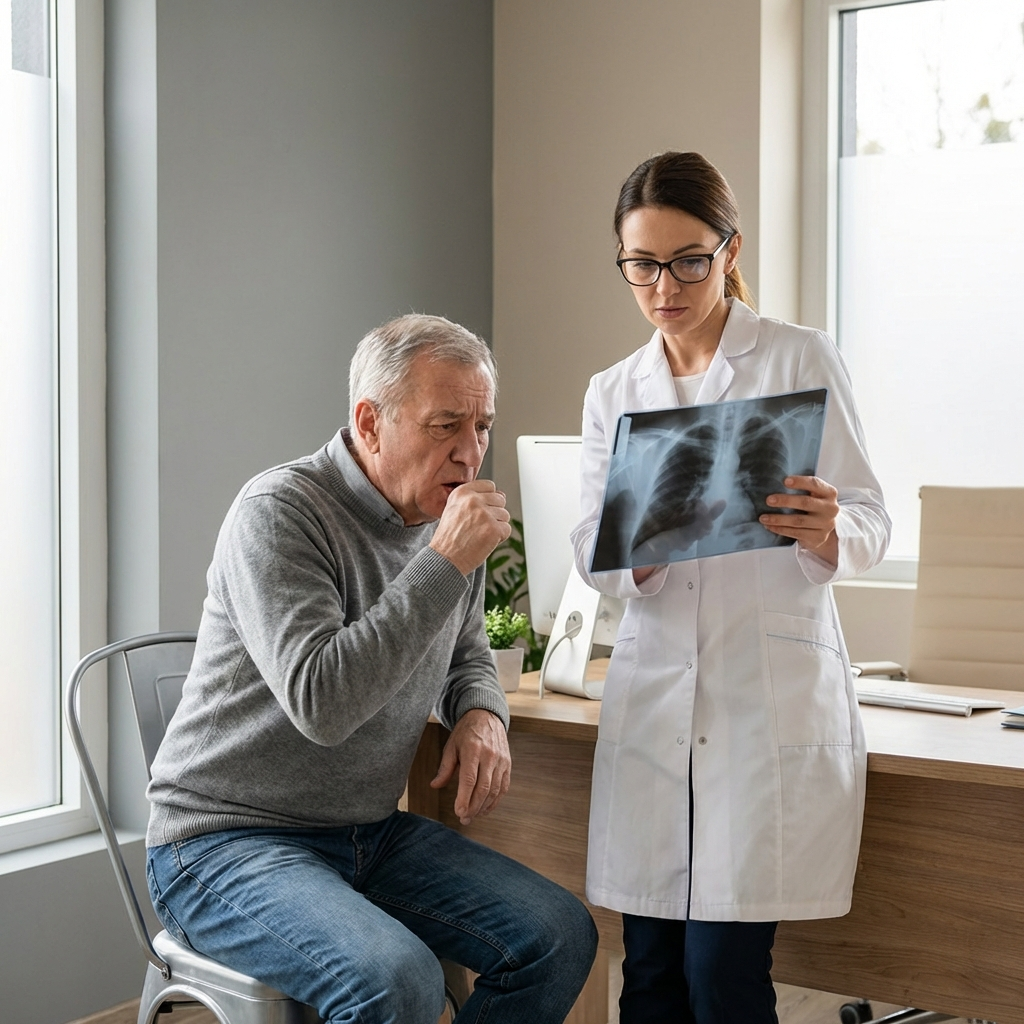
- Shortness of breath (dyspnea) that worsens during physical activities or even light exertion.
- A persistent cough that often produces white, yellow, or greenish mucus from the lungs.
- Chest tightness and wheezing sounds during breathing, especially during exhalation or talking.
- Frequent respiratory infections like bronchitis or pneumonia that take longer to heal.
- Chronic fatigue and lack of energy due to reduced oxygen levels in the blood and muscles.
- Unexplained weight loss occurring in the more advanced stages of the disease's development.
Chronic Obstructive Pulmonary Disease (COPD) is a progressive condition affecting millions, causing permanent airway narrowing.
Key symptoms include shortness of breath, chronic cough, and increased mucus production, significantly impacting quality of life.
While chronic, proper medical help and lifestyle changes can slow progression and alleviate daily breathing difficulties.
Timely diagnosis and a personalized plan are essential to preserve lung function and prevent severe respiratory complications.
What are the main COPD symptoms?
How to effectively support COPD patients?
The first and most critical step is smoking cessation to prevent further direct damage to the lung alveoli.
Inhalation therapy with bronchodilators and corticosteroids helps open airways and reduce chronic inflammation.
Pulmonary rehabilitation includes specialized breathing exercises to strengthen the diaphragm and chest muscles.
Proper hydration and an antioxidant-rich diet help thin mucus, making it easier to cough up and clear.
Treatment methods at Medical Time
Our pulmonology team performs detailed lung function assessments using spirometry and advanced diagnostic tools.
We apply modern infusion therapy to strengthen the body's general state and replenish essential minerals.
Oxygen therapy is recommended for patients with low blood oxygen levels to protect the heart and brain.
Educating patients and family members on recognizing exacerbation triggers and symptoms is a top priority.
Each treatment plan is strictly individual, focused on reducing discomfort and preventing long-term disability.
Life with COPD: Practical Tips
Avoid exposure to air pollution, dust, strong odors, and extreme cold that can trigger lung spasms.
Regular vaccination against flu and pneumonia reduces the risk of dangerous infections that damage the lungs.
Maintain moderate physical activity, such as daily walking, to keep muscle tone and circulation healthy.
Pursed-lip breathing techniques can help keep the airways open longer during any physical effort.
Why is timely help vital?
- Slowing down the progression of the disease and preserving the remaining lung capacity for a longer time.
- Significant reduction in the frequency and severity of choking episodes that cause patient anxiety.
- Improved physical stamina, allowing for more independent performance of daily tasks and work activities.
- Decreased number of hospitalizations and emergency visits due to severe respiratory infection complications.
- Better sleep quality and reduced psychological stress often associated with chronic breathing problems.
- Extension of life expectancy with a much better daily quality without constant dependence on others.
Frequently Asked Questions about COPD
COPD is a chronic and progressive disease, meaning it cannot be fully cured, but symptoms can be managed and progression slowed.
Asthma is often reversible with treatment, while COPD involves permanent and progressive airway damage, usually from long-term smoking.
Yes, quitting smoking is the only measure proven to stop the accelerated decline in lung function. It prevents further destruction of the lungs.
COPD patients should undergo spirometry at least once a year, or more frequently if symptoms change or worsen.
Yes. While less common, it can be caused by long-term exposure to pollution, chemicals, dust, or genetic factors like Alpha-1 antitrypsin deficiency.
Book a consultation
Get in touch — we'll suggest a plan tailored to you.