

- Unexplained stomach pain or chronic digestive problems
- Suspected tumors, infections, or stomach and esophageal ulcers
- Nausea, vomiting, or unexplained weight loss
- Post-operative monitoring of the digestive tract
- Tissue sampling for histopathological and microbiological analysis
- Therapeutic interventions — lavage or foreign body extraction
At Medical Time Hospital, the examination is performed with modern flexible gastroscopes supervised by experienced gastroenterologists.
Gastroscopy is an endoscopic procedure for visual examination of the esophagus, stomach, and duodenum. It detects the causes of abdominal pain, digestive issues, and suspected tumors.
When is gastroscopy needed?
Preparation for gastroscopy
You must not eat or drink for at least 6 hours before the scheduled examination.
The patient signs a consent form and discusses the procedure with the gastroenterologist.
The examination is performed under general anesthesia — the patient sleeps and feels nothing.
Diabetic patients and those on anticoagulant therapy must adjust preparation per doctor's instructions.
Due to anesthesia, you must come with an escort and not drive after the procedure.
Important preparation note: Do not eat or drink for at least 6 hours before gastroscopy. Come with an escort as the procedure is performed under general anesthesia.
What does gastroscopy look like?
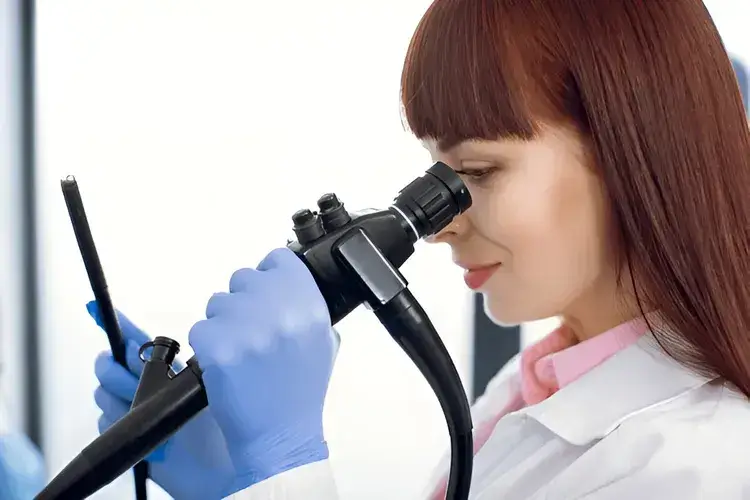
The patient lies under general anesthesia while a flexible gastroscope is inserted through the mouth to the stomach.
A camera displays the organ interior on screen, allowing detailed tissue examination.
During the procedure, the doctor takes samples, swabs, or performs therapeutic interventions.
Thanks to modern equipment, the image is extremely clear and the risk of complications is minimal.
The examination takes 15–30 minutes. Most patients resume normal activities the next day.
Recovery after gastroscopy
After the examination, brief throat irritation or mild discomfort may occur.
Complications are extremely rare thanks to our facility's experience and equipment.
Post-procedure instructions are provided in writing at discharge.
For urgent pathological findings, results are prioritized and specialist consultations arranged.
Advantages of gastroscopy
- Detects diseases invisible on X-ray or CT scan
- Enables tissue sampling for microbiological and histopathological analysis
- Early detection of malignant tumors and chronic infections
- Combines diagnostics and therapy in a single procedure
- Gold standard for unexplained gastrointestinal pain
- Urgent examination without delay when needed
Frequently asked questions about gastroscopy
No — it is performed under general anesthesia. The patient sleeps and feels no pain or discomfort. Modern sedation techniques ensure a completely painless experience.
The examination itself takes 15–30 minutes. Total hospital stay is 1–2 hours, including preparation and brief post-procedure monitoring.
It is recommended to wait 1–2 hours until the anesthesia effect wears off. Start with light food and mild beverages.
Yes — due to anesthesia, an escort is mandatory and driving is prohibited for the rest of the day. We recommend arranging transportation in advance.
You must fast for at least 8 hours before the procedure. Do not drink water 2 hours before. Inform your doctor about all medications you are taking.
Yes — gastroscopy is the most reliable method for early detection of malignant changes in the stomach, esophagus, and duodenum. It also allows taking biopsies for further analysis.
The frequency depends on the individual patient's condition. For people with chronic gastrointestinal issues, an annual check-up or as advised by the doctor is recommended.
Book a consultation at Medical Time
Our team is here for all your questions and to schedule your appointment.