Why is a pulmonologist examination important?

Why is a pulmonologist examination important?

Lung health is the foundation of the overall health of the entire organism. Any problem with breathing directly affects the level of oxygen in the blood, and therefore the work of the heart, brain and other organs.

Many people ignore the first symptoms of lung disease, attributing them to fatigue, stress or mild colds. However, a timely examination by a pulmonologist is crucial for early detection of problems.

When pulmonary diseases are detected at an early stage, the treatment is significantly shorter, more successful and safer for the patient, which avoids permanent tissue damage.

At Medical Time Hospital, an expert team of doctors is dedicated to a detailed analysis of your breathing and providing the most up-to-date therapeutic solutions.

Symptoms you should not ignore

Symptoms you should not ignore

1

A persistent and prolonged cough lasting more than three weeks, regardless of whether it is dry or productive.

2

Difficulty breathing or a feeling of lack of air (dyspnea) when performing daily, routine activities.

3

Whistling, whistling or wheezing in the chest that usually occurs during exhalation, characteristic of asthma.

4

Chest pain, tightness, or discomfort that worsens with a deep breath or during a coughing fit.

5

Coughing up blood or blood, which is a serious alarm symptom that requires immediate medical attention.

6

Chronic fatigue, malaise and frequent susceptibility to respiratory infections that resolve slowly.

What does a pulmonologist's examination look like?

What does a pulmonologist's examination look like?

The examination begins with a detailed medical history, where the doctor talks to you about your symptoms, habits like smoking, and family medical history.

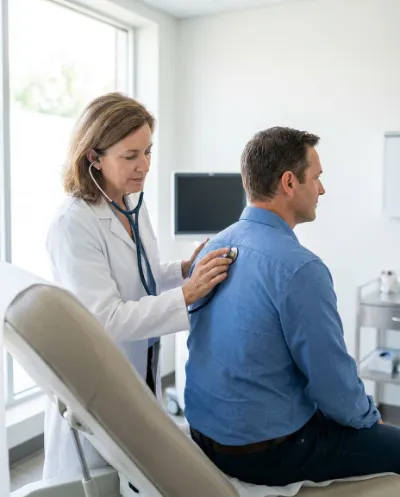
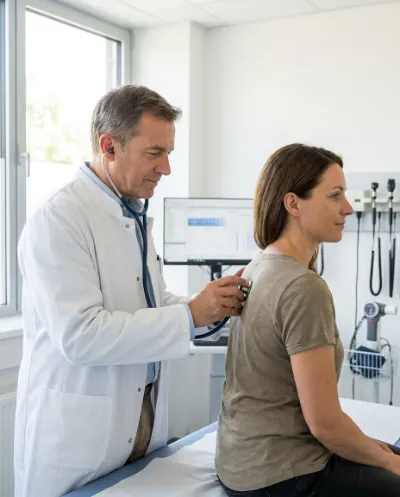
This is followed by a physical examination that includes auscultation, i.e. listening to the lungs with a stethoscope to detect murmurs.

Spirometry is often the next step, which is a painless test that measures your lung capacity and function.

If necessary, the doctor may refer you to a lung X-ray or chest CT for a more precise visualization of the tissue.

Based on the collected results, an accurate diagnosis is made and an adequate, individual therapy plan is determined for you.

Timely resolution of symptoms

Timely resolution of symptoms

When the cause of cough or difficulty breathing is diagnosed in time, the treatment gives drastically better and faster results.

For patients with asthma, properly dosed inhalation therapy allows a normal life without dangerous attacks of suffocation.

Infections such as bronchitis and early pneumonia are successfully treated with antibiotics and appropriate infusions before they become complicated.

For long-term smokers, a pulmonary examination helps them recognize the first signs of damage and take protective measures in a timely manner.

Our goal is not only to relieve immediate discomfort, but to provide you with permanent relief and the return of full lung capacity.

Prevention and lung health

Prevention and lung health

In addition to solving existing problems, the pulmonologist educates you about preventive measures that protect the health of the respiratory tract.

Quitting smoking is the most important step, and experts can help you with advice and specialized smoking cessation programs.

Avoiding polluted air, household allergens and regular airing of rooms significantly reduce the risk of respiratory problems.

Regular annual examinations by a pulmonologist, especially for risk groups of patients, are a guarantee of long-term healthy and functional lungs.

Advantages of early diagnosis

1

Preventing disease progression and avoiding permanent and irreversible damage to sensitive lung tissue.

2

Faster and easier recovery from infections with a significantly lower risk of severe inflammation and complications.

3

Improved quality of daily life through easier breathing, more energy and greater physical endurance.

4

Precise and personalized therapy that works on the very cause of the problem, not just on masking the symptoms.

5

Peaceful and quality sleep, without waking up at night caused by sudden attacks of coughing or choking in the chest.

6

Reducing the stress and anxiety that are often associated with the feeling of constant shortness of breath.

Frequently asked questions about the pulmonologist's examination

The examination itself, with taking a detailed history, listening to the lungs and determining the therapy, usually lasts between 20 and 30 minutes.
No special preparation is required. It is recommended that you bring your previous medical records and lung scans if you have them.
No, spirometry is a completely painless and non-invasive diagnostic method. You only need to blow strongly into the device according to the doctor's instructions.
If the cough lasts longer than three weeks, does not go away with standard medicines or is accompanied by expectoration, be sure to see a doctor.
Absolutely. Long-term smokers belong to a high-risk group, and regular preventive examinations are recommended to monitor lung function and prevent COPD.