

- Unexplained chronic cough lasting longer than three weeks that doesn't respond to usual therapy.
- Coughing up blood (hemoptysis), which always requires immediate and detailed endoscopic verification.
- Suspicious shadows, spots, or changes detected on an X-ray or lung CT scan.
- Recurrent pneumonia and respiratory tract infections that are difficult to treat.
- Suspected presence of a foreign body in the airways, especially in emergencies.
- Monitoring of oncological patients and taking tissue samples for histopathological analysis.
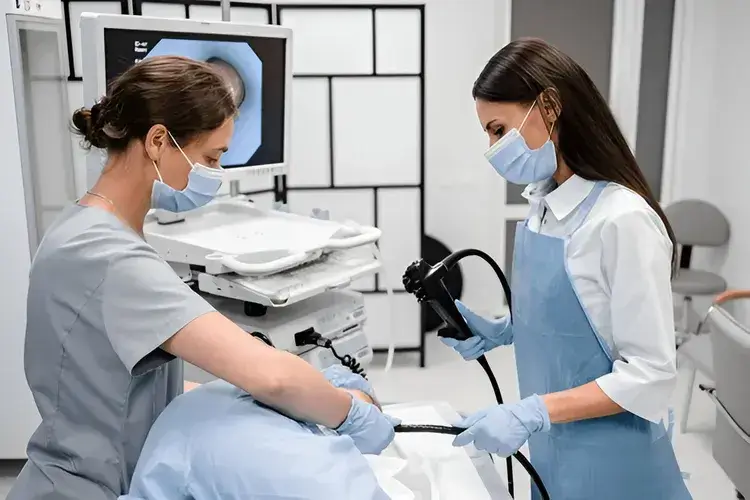
At Medical Time Hospital, bronchoscopy is performed using modern, high-resolution devices that provide detailed insight into the structure of the respiratory system.
Bronchoscopy is an endoscopic diagnostic procedure used to visually examine the trachea and bronchi using a flexible instrument (bronchoscope) equipped with a camera.
When is bronchoscopy needed?
Preparation for bronchoscopy
Preparation for a bronchoscopy is simple but crucial for the patient's safety and the procedure's success.
Since the examination is performed under anesthesia, it is absolutely necessary that the patient does not eat solid food or drink liquids for at least 6 hours before the appointment.
Before the intervention, a detailed consultation with a pulmonologist and anesthesiologist is held; blood pressure, pulse, and oxygen levels are measured.
If the patient is using specific therapy (such as diabetes medication or anticoagulants), the doctor will adjust the doses in advance.
Due to the effects of anesthesia, it is advised to arrive with an escort and strictly avoid driving for the rest of the day.
Important to know: Our team at Medical Time Hospital cares about every detail. Patient safety comes first, and the staff will explain every step to you before starting.
How is bronchoscopy performed?
The examination is performed in a lying position in the sterile, controlled conditions of our endoscopy room.
The patient is given general (short-term) anesthesia, during which they sleep and feel no discomfort or pain.
A specialist doctor inserts a thin, flexible bronchoscope through the nose or mouth, gradually guiding it through the trachea to the bronchi.
A camera at the tip of the instrument transmits a high-resolution image to a screen, allowing a detailed examination of the mucosa.
The procedure itself lasts between 15 and 30 minutes. During this time, the doctor can take tissue samples for biopsy, take swabs, or wash the bronchi (lavage).
Recovery after intervention
After the procedure is completed, the patient wakes up from anesthesia and stays in our day hospital under the supervision of the medical team for about 1 to 2 hours.
It is possible to feel a slight tickle in the throat, hoarseness, or an urge to cough, which are normal and temporary reactions.
In rare cases, if a biopsy was performed, mild coughing up of blood-tinged sputum may occur during the first day.
It is recommended to wait with food and drink consumption until the swallowing reflex fully returns, which usually takes a couple of hours.
After a short rest, the patient receives a discharge summary with the basic findings and can return home. Biopsy results arrive later.
Benefits of bronchoscopy at Medical Time
- The examination is performed without waiting, at times that suit the patient.
- Maximum comfort and complete absence of pain thanks to short-term anesthesia.
- Early detection of tumors, infections, and structural anomalies of the airways.
- Precise taking of samples (biopsy) directly from suspicious areas.
- Possibility of performing therapeutic procedures (secretion removal, foreign body extraction).
- Interpretation of results by a team of top pulmonologists with years of experience.
Frequently asked questions about bronchoscopy
No. At Medical Time Hospital, bronchoscopy is routinely performed under general anesthesia (analgosedation). This means the patient sleeps during the entire examination, feels no pain or choking, and does not remember the procedure itself.
The bronchoscopy procedure itself usually lasts from 15 to 30 minutes. However, with preparation and the recovery period after waking up from anesthesia, expect to spend about 2 hours at the hospital.
No. Due to the use of anesthesia, it is extremely important that the patient does not consume solid food and liquids for at least 6 hours before the scheduled examination to avoid complications.
The doctor will inform you of the basic findings, meaning what they visually noticed, immediately after you wake up. If samples were taken for biopsy or microbiological analysis, results take a few days, of which you will be notified.
Yes. Given that you will receive anesthesia, your reflexes and concentration may be temporarily slowed down after waking up. It is mandatory to have an escort for the journey home, and driving motor vehicles is strictly forbidden for 24 hours after the procedure.
Book a consultation at Medical Time
Our team is here for all your questions and to schedule your appointment.