

What is gastroscopy (EGDS)?
Gastroscopy, known in medicine as esophagogastroduodenoscopy (EGDS), is an endoscopic examination of the upper part of the digestive system — the esophagus, stomach and duodenum. It is performed with a thin, flexible instrument (a gastroscope) whose tip carries a miniature high-resolution camera that shows the doctor the lining from the inside, in real time.
Unlike ultrasound or X-ray, gastroscopy lets the doctor see changes directly, which makes it the most accurate method for detecting gastritis, ulcers, reflux disease, polyps, tumors and infection with the Helicobacter pylori bacterium. During the same exam it is also possible to take a tissue sample (biopsy) or perform a minor therapeutic procedure.
At Medical Time, gastroscopy is carried out in controlled, hospital conditions, under constant supervision by an anesthesiologist and with modern video-endoscopic equipment. The goal is an exam that is precise, safe and — thanks to sedation — completely free of discomfort for the patient.
Precisely because of this direct view of the lining, gastroscopy is considered the gold standard in diagnosing the upper digestive tract — no other method offers such a reliable assessment, or the option to take a tissue sample and resolve a minor problem in the same procedure.
When is gastroscopy performed? Symptoms and indications
Gastroscopy is recommended when upper-abdominal complaints last longer, do not resolve with the usual therapy, or keep recurring. It is also essential when a more serious condition is suspected or when the effectiveness of already-started treatment needs to be checked.
The most common indications and symptoms for which the exam is scheduled are:
As a general rule, upper-abdominal complaints that last longer than two to three weeks, or that keep coming back, warrant a gastroscopy — because this is how harmless conditions are separated in time from those that require treatment.
- persistent heartburn, acid and regurgitation (reflux) that do not resolve with medication
- pain or burning in the upper abdomen, bloating and a feeling of fullness after eating
- nausea, vomiting or difficult and painful swallowing (dysphagia)
- vomiting blood or black, tarry stools (a sign of bleeding in the upper digestive tract)
- anemia of unknown cause and unintended weight loss
- suspicion of an ulcer, gastritis, Helicobacter pylori infection or tumor changes
- monitoring an established diagnosis (reflux, ulcer, Barrett's esophagus) and following up on therapy
- a family history of stomach or esophageal cancer — as a preventive exam
Which diseases and changes gastroscopy detects
Thanks to the direct view of the lining, gastroscopy distinguishes harmless changes from those that require treatment and enables early diagnosis, when treatment is most successful. The exam can reveal:
- gastritis (inflammation of the stomach lining) and inflammation of the esophagus (esophagitis)
- peptic ulcer of the stomach and duodenum
- gastroesophageal reflux disease (GERD) and its complications
- Barrett's esophagus — a precancerous change that requires regular monitoring
- polyps, benign changes and suspicious lesions of the lining
- early cancer of the stomach and esophagus
- infection with the Helicobacter pylori bacterium
- the source of bleeding in the upper digestive tract and narrowing (stenosis) of the esophagus
Preparing for gastroscopy
Good preparation is a prerequisite for a clear exam and an accurate result. The basic rule is that the stomach must be empty: the patient should not eat for at least 6 hours before the exam and should stop clear fluids 2 hours beforehand. An empty stomach gives the doctor a clean view and makes sedation safer.
Since gastroscopy at Medical Time is performed under sedation, it is important that the patient comes accompanied and does not drive a vehicle or operate machinery that day. Before the exam you sign a consent form and have a short conversation with the doctor about how the procedure will go.
What is important to tell the doctor and to keep in mind:
- all medications you take — especially blood thinners (anticoagulants) and diabetes therapy
- chronic illnesses, previous surgeries and allergies (particularly to medications and anesthetics)
- the doctor will tell you which morning medications you may take with a little water and which to skip
- the day before the exam avoid heavy, fatty meals; do not smoke on the morning of the exam
- bring any earlier findings and medical documentation if you have them
What gastroscopy is like — step by step and how long it takes
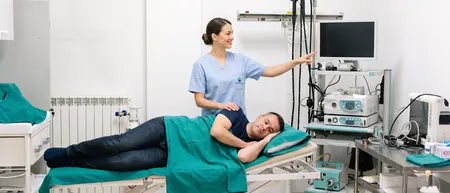
The exam is performed lying down, most often on the left side. Once the anesthesiologist administers brief sedation, the patient sleeps peacefully and feels nothing. The doctor then carefully introduces a thin, flexible gastroscope through the mouth and moves it through the esophagus, stomach and duodenum, examining every part of the lining.
The camera transmits a magnified image in real time, so the doctor can assess changes in detail, take a biopsy if needed or perform a minor procedure (for example stopping bleeding or removing a polyp). The exam itself most often lasts between 5 and 15 minutes, while the whole visit — with preparation, sedation and waking up — usually takes about an hour.
Throughout the entire procedure the whole team, including the anesthesiologist, continuously monitors pulse, breathing and oxygen saturation, so the exam is at once calm for the patient and completely safe.
During the exam the patient feels no choking or pain; breathing remains normal the whole time, and the doctor and anesthesiologist control every detail. When it is over, the sedation wears off quickly, so most patients wake up calm and rested, with no memory of the exam itself.
Biopsy and the Helicobacter pylori test
If during the exam the doctor notices a suspicious change, inflammation or ulcer, a tiny tissue sample is taken — a biopsy. Taking a biopsy is painless, does not significantly prolong the exam and does not affect recovery, because the lining does not have pain receptors the way the skin does.
During gastroscopy a rapid urease test for Helicobacter pylori can also be done routinely — the bacterium that is the most common cause of ulcers and chronic gastritis. Detecting and treating this infection significantly reduces the risk of complications and ulcer recurrence, and over the long term the risk of stomach cancer.
The samples taken are sent for histopathological analysis, which confirms or rules out inflammation, precancerous changes and malignant cells. This step is crucial because it allows treatment to begin in a targeted and timely way, instead of guessing based on symptoms alone.
After gastroscopy — recovery and results
After the exam the patient rests briefly until the effect of the sedation passes, under the supervision of our staff. Mild bloating, belching or a passing irritated feeling in the throat are common and subside during the day. A light meal is usually allowed soon after the exam, on the doctor's advice.
You receive the gastroscopy findings and recommendations immediately upon waking, while the histopathology result of the biopsy, if one was taken, arrives in the following days. All images and findings are stored digitally for further follow-up.
For the next two hours it is recommended to take only fluids and lighter food, until full sensation returns to the throat; spicy, hot and hard food should be avoided that day. Alcohol and strenuous physical exertion are postponed until the next day.
- on the same day do not drive, do not sign important documents and do not make important decisions
- be sure to arrange someone to accompany you home
- most patients resume their usual activities as early as the next day
- contact your doctor if severe abdominal pain, a high fever or vomiting of blood occur
Risks, complications and contraindications
Gastroscopy is a routine and very safe procedure, and serious complications are extremely rare. The most common issues are transient and mild — an irritated feeling in the throat, bloating or nausea. Rarely, with therapeutic procedures or biopsies, minor bleeding may occur; perforation (damage to the wall) is a very rare complication.
The exam is postponed or adjusted in unstable cardiac and respiratory conditions, suspected perforation, and in patients who were not fasting. This is why a conversation with the doctor and anesthesiologist before gastroscopy is important; they assess whether and when the exam can be performed safely.
It is important to know that the risk of an undetected disease is almost always greater than the risk of the exam itself. That is why, when there is a clear indication, gastroscopy is not postponed — early diagnosis of an ulcer, Helicobacter pylori infection or early changes in the lining significantly improves the outcome of treatment.
Why have your gastroscopy at Medical Time
Medical Time performs gastroscopy in modern hospital conditions, with an experienced team of gastroenterologists and anesthesiologists and an individual approach to every patient. Everything — from the exam, through the laboratory, to additional specialist consultations — is available in one place.
After the exam we remain at your disposal to interpret the findings, arrange further tests and follow-up exams. All images and reports are stored digitally, so every subsequent gastroscopy can be compared with the previous one and you can track how changes progress or resolve with therapy.
- painless gastroscopy under brief sedation, without stress or discomfort
- modern HD video endoscopes and high sterilization standards
- experienced gastroenterologists and constant supervision by an anesthesiologist
- quick scheduling, without long waits and possible without a referral
- findings and recommendations the same day, with digital storage of results
- everything in one place — diagnostics, laboratory and further treatment
Gastroscopy under sedation, with local anesthesia or without sedation?
The exam can be performed in several ways. At Medical Time it is routinely done under sedation (analgosedation), because this is the most comfortable option for the patient and allows the doctor a calm and thorough examination.
| Method | How it is performed | Who it suits best |
|---|---|---|
| Gastroscopy under sedation (analgosedation) | Brief sedation supervised by an anesthesiologist; the patient sleeps and feels nothing | Most patients, especially with fear of the exam and a sensitive gag reflex |
| With local anesthesia | A spray to locally numb the throat; the patient is awake | When sedation is not desirable or the exam is short and targeted |
| Without sedation | An exam without medication, with the patient's cooperation | Short, follow-up exams in patients without a pronounced gag reflex |
Cost of gastroscopy
The cost of gastroscopy depends on how it is performed (under sedation or with local anesthesia), on whether a biopsy is taken and a Helicobacter pylori test is done, as well as on any additional procedures. You receive the exact price and an appointment quickly, by phone or through the contact form.
- Gastroscopy with local anesthesia
- Gastroscopy under sedation (analgosedation)
- Additional: biopsy / Helicobacter pylori test
For the current price list and a personalized offer call 062-399-888 or contact us — the price is confirmed before the exam, with no hidden costs.
Frequently asked questions about gastroscopy
No. At Medical Time gastroscopy is performed under brief sedation, so the patient sleeps and feels no pain or discomfort during the exam. After waking, only a passing irritated feeling in the throat is possible.
The exam itself most often lasts 5 to 15 minutes. The whole visit, including preparation, sedation and waking up, is usually about an hour.
You should not eat for at least 6 hours before gastroscopy, and you stop clear fluids 2 hours before the exam. An empty stomach is a prerequisite for a clear result and safe sedation.
No. Because of the sedation you must come accompanied and not drive or operate machinery that day, since sedation medications temporarily slow your reflexes.
You receive the findings and recommendations immediately after waking from sedation. If a biopsy was taken, the histopathology result arrives in the following days.
Yes. It is a routine procedure with very low risk, performed under constant supervision by an anesthesiologist. Serious complications are extremely rare.
No. At Medical Time you can schedule gastroscopy without a referral, usually quickly and without a long wait.
Helicobacter pylori is a bacterium that is a common cause of ulcers and gastritis. During gastroscopy a rapid test for this bacterium can be done, and a biopsy if needed.
It depends on the findings. With a normal result and no complaints the exam is not repeated routinely, while for conditions such as Barrett's esophagus, an ulcer or therapy monitoring, gastroscopy is repeated at intervals set by the doctor.
If heartburn lasts longer or does not settle with medication, gastroscopy is advisable because it shows whether there is reflux disease, inflammation of the esophagus or other changes, and allows the therapy to be adjusted to your condition.