

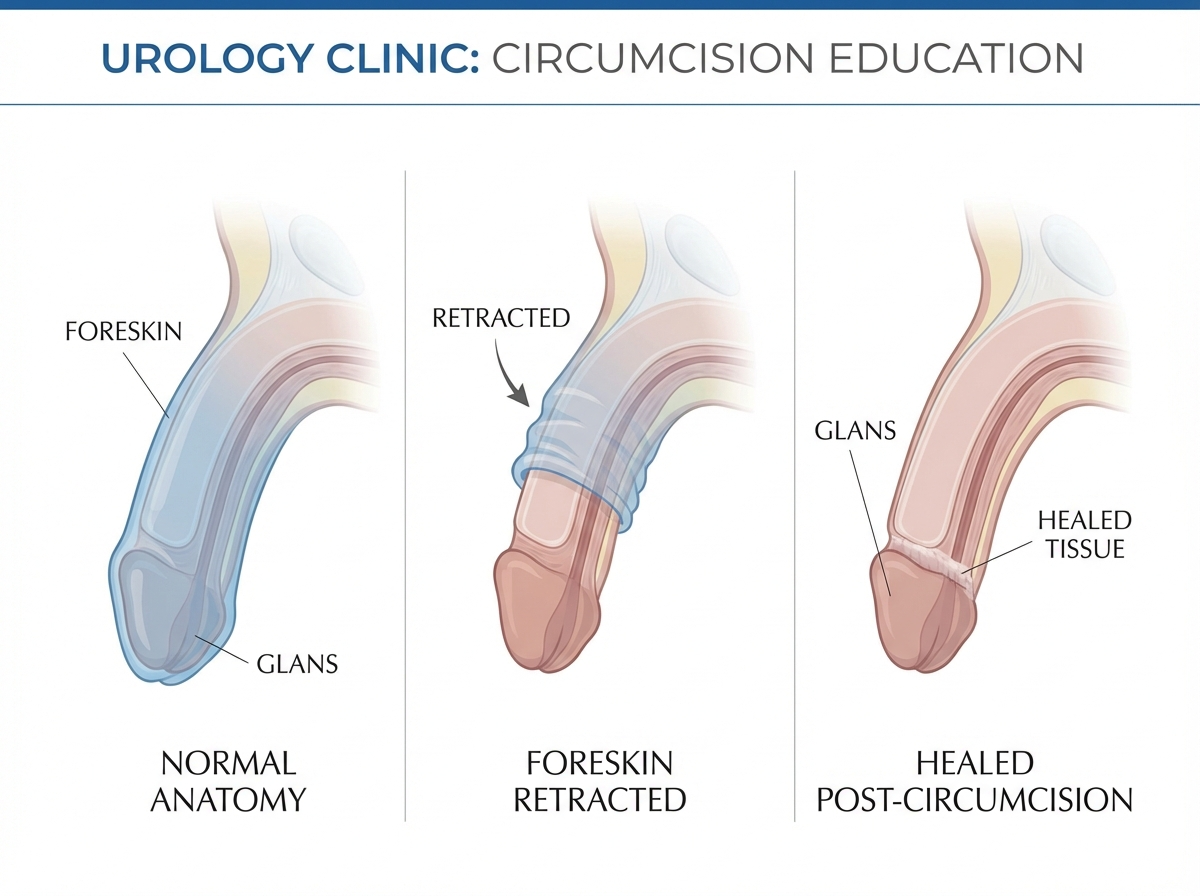
- The most important reason is to solve urological foreskin problems, primarily a condition known as phimosis.
- Phimosis is the inability to retract the foreskin over the glans, causing pain, difficulty urinating, and increased infection risk.
- For recurrent infections of the glans like balanitis and balanoposthitis, circumcision has proven to be an effective, permanent solution.
- Removing the foreskin permanently eliminates the dark, moist environment where bacteria, fungi, and secretions thrive.
- The procedure also plays a significant role in preventing complications due to poor hygiene in sensitive health conditions.
- It is especially important for patients with diabetes or weakened immunity, where the risk of urological infections is much higher.
Circumcision is the surgical removal of the prepuce (the foreskin covering the glans penis). It is one of the most common urological procedures.
It is performed for medical, hygienic, or preventive reasons. Although often perceived as a routine intervention, there are clearly defined indications.
Performing it is not only recommended but is sometimes absolutely necessary to preserve a man's long-term urological health.
At Medical Time hospital, this procedure is performed according to the highest standards, ensuring maximum comfort and a fast recovery.
Why is it important to get circumcised?
How do these problems arise?
Foreskin problems can arise from congenital narrowing (congenital phimosis), which is often only noticed at a later age.
Poor or difficult intimate hygiene leads to the accumulation of smegma and bacteria, triggering inflammation and redness.
Repeated infections leave micro-scars, which over time lead to permanent scarring and further narrowing of the prepuce.
Eventually, these factors can cause severe pain during intercourse, skin tearing, and bleeding, disrupting normal sexual life.
Ignoring the condition can lead to severe complications like paraphimosis, which requires immediate medical intervention.
What does the procedure look like?
Circumcision is a short and safe surgical intervention usually performed in analgosedation, meaning the patient sleeps and feels no pain.
The surgery itself is relatively quick, after which very fine stitches are placed that mostly dissolve on their own.
Recovery after the intervention is extremely fast, and post-operative discomfort is minimized with proper analgesics and care.
After a brief observation stay at the hospital, the patient can return to daily routines and lighter activities very soon.
Full recovery and a return to regular sexual activities are always advised only after complete wound healing and doctor clearance.
Medical significance and benefits
Reducing the risk of infection is the biggest benefit, as the space where harmful bacteria and fungi usually remain is removed.
Maintaining hygiene becomes drastically easier - daily washing and care of the genital area are much simpler and more effective.
Prevention of complications is key; circumcision reliably prevents the development of serious urological problems like bladder infections.
Medical studies also confirm a significantly reduced risk of transmitting certain diseases, including penile cancer.
When should you not delay surgery?
- If you experience frequent pain, discomfort, or severe tightening of the foreskin, especially during erections and intercourse.
- When there is an absolute or partial inability to retract the foreskin over the glans, complicating urination.
- If you notice recurring redness, persistent itching, skin flaking, or unusual discharge in the area.
- When you have frequent urological infections that keep coming back despite proper prescribed therapy.
- If you notice thickening on the foreskin, tissue tearing, or small painful bleeding sores caused by friction.
- Ignoring these symptoms can lead to sudden complications like paraphimosis, which requires emergency surgery.
Frequently asked questions about circumcision
No, the surgery is most often performed under analgosedation (while you sleep) or local anesthesia, making it completely painless.
Recovery is relatively fast. You can return to light daily activities in just a few days, while sexual intercourse is advised after 4 to 6 weeks.
Studies and patient experiences show no negative impact. In fact, by eliminating pain and phimosis, the quality of intimate life improves significantly.
As with any surgery, minor swelling, bruising, or slight bleeding is possible, but serious complications are extremely rare when done by an expert.
You will receive precise wound care instructions. It is important to keep the area clean and dry, wear loose underwear, and use prescribed creams.
Book a consultation
Get in touch — we'll suggest a plan tailored to you.