

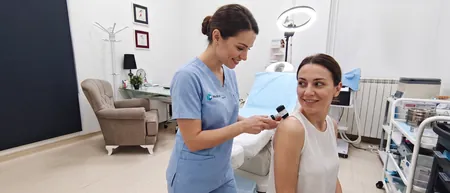
What a dermatologist exam covers
A dermatologist is a specialist in diseases of the skin, hair and nails, as well as changes on the mucous membranes. The exam covers the whole skin, not only the spot that bothers you. The change that needs looking at first is often in a place you cannot see yourself: on the back, behind an ear, on the scalp or between the toes.
The exam begins with a conversation about when the change appeared and how it has changed, whether it itches, hurts or flakes, what you have been putting on it, and what you come into contact with at work and at home. An examination of the skin follows, under strong light and with magnification.
Suspicious moles and pigmented lesions are examined with a dermatoscope, a handheld device that magnifies and lights the skin so the structure below the surface becomes visible. Dermoscopy is painless, takes a few seconds per lesion and settles a question the naked eye cannot settle.
Based on the exam the dermatologist makes a diagnosis and suggests the next steps: topical or oral therapy, a change in skin care, additional tests (a swab, a mycology sample, allergy testing, laboratory work), a check-up in a few months, or removal of the lesion with histopathology.
For people with many moles, fair skin, childhood sunburns or melanoma in the family, the exam is also preventive: lesions are recorded and monitored, so anything new or altered is spotted in time.
When to see a dermatologist
You see a dermatologist when a skin change does not go away, keeps changing or keeps coming back, and above all when you are not sure what it is. Most skin conditions respond well to treatment, but the right treatment follows the diagnosis; creams bought on your own often change how a lesion looks and make it harder to recognise.
The most common symptoms and indications for booking an exam are:
- a mole that has changed colour, shape or size, itches or bleeds
- a new skin lesion that is growing, or a sore that will not heal
- acne and rosacea that do not clear up with cosmetics and home care
- eczema, psoriasis, persistent itching and flaking skin
- hives, rashes and reactions to medication, food or cosmetics
- fungal infections of the skin and nails, warts and herpes
- increased hair loss, bald patches and stubborn dandruff
- regular mole checks for people at higher risk of melanoma
What the exam looks like
A dermatologist exam is painless and needs no preparation. The one thing that helps is not applying cream, make-up or nail polish to the area being examined on the day, because a layer of product covers exactly what the dermatologist needs to see.
After the conversation about your symptoms comes the examination of the skin. You undress to your underwear so the places you cannot reach yourself can be seen; the exam takes place in the consulting room, in privacy and, if you wish, with a nurse present. Every suspicious lesion is examined with a dermatoscope and compared with the other lesions on your skin.
If needed, a swab or a mycology sample is taken during the same visit, or allergy testing and laboratory work are arranged. If a lesion needs to be removed, the dermatologist explains how that is done and books an appointment with the surgeon, and the removed tissue always goes for histopathology.
The exam most often takes 20 to 30 minutes. A full-skin exam with recording of moles takes longer, around 30 to 40 minutes, because every lesion is examined and documented separately.
What to bring to the exam
What helps a dermatologist most is seeing what the lesion looked like earlier, and that is usually on your phone.
We recommend that you prepare:
- earlier dermatology findings, dermoscopy images and histopathology reports
- photographs of the lesion from an earlier period, if you have them
- a list of the medications and products you take, including supplements
- the creams, ointments and cosmetics you have applied to the lesion
- details of allergies, chronic conditions and skin diseases in the family
When you receive the report and recommendations
You receive the exam report immediately. The dermatologist explains what they saw and what it means during the exam itself, and issues a written report with the diagnosis, therapy and recommendations at the end. The dermoscopy findings are interpreted while you are still in the room.
Results of swabs, mycology and laboratory tests come later and are interpreted against what the doctor saw on the skin. The same rash can have different causes, and the treatment is set only once it is clear which one it is.
If a lesion has been removed, the histopathology report is the final word on what it was, and you receive it together with an explanation of what happens next. All findings and dermoscopy images are kept, so at your check-up your skin is compared with its earlier state. With mole monitoring it is exactly that comparison that reveals a change.
Why have a dermatologist exam at Medical Time
At Medical Time the dermatology exam, dermoscopy, laboratory and removal of lesions are all in one place. When a suspicious mole is spotted during the exam, we do not send you off to find an appointment elsewhere; the next step is arranged right away.
With skin cancer, early detection changes the outcome, and the change is visible to the naked eye. That is why we take the exam seriously even when you came for something else: the whole skin is examined, lesions are recorded, and the follow-up is booked while you are still here.
- dermoscopic examination of moles and pigmented lesions
- an exam of the whole skin, not only the lesion you came about
- swabs, mycology and laboratory tests in the same place
- our own operating theatre and removal of lesions with histopathology
- quick booking without long waiting and without a referral
- a written report the same day and digital storage of images for comparison at check-ups
Price
The price of a dermatologist exam depends on whether it is a first exam, a follow-up or a full-skin exam with dermoscopy, and on whether additional tests are recommended. See the prices of all our doctor exams in the price list, and call us for an exact quote and an appointment.
- First dermatologist exam
- Follow-up dermatologist exam
- Mole check with dermoscopy
For an appointment, call 062-399-888.
Frequently asked questions about the dermatologist exam
When it changes. A mole is suspicious if it is growing, changing colour or becoming patchy, has irregular edges, is more than 6 millimetres across, itches, bleeds or simply looks different from the others on your body. If you are unsure, show it; a dermoscopic check takes a few seconds.
No. A dermatoscope is a handheld magnifier with a strong light that is held against the skin. There is no radiation, no needles and nothing to feel beyond the touch of the device.
No special preparation is needed. On the day, do not apply cream, make-up or nail polish to the area being examined, and if your face is being examined, come without make-up.
A targeted exam of a single lesion or complaint most often takes 20 to 30 minutes, while a full-skin exam with dermoscopy and recording of moles takes 30 to 40 minutes.
No. You can book a dermatologist exam directly, without a referral and without long waiting.
No. The exam determines whether the lesion should be removed and an appointment for the procedure is booked. The removal is done by a surgeon, and the removed tissue always goes for histopathology.
You receive the exam and dermoscopy findings immediately, and a written report at the end of the exam. Results of swabs, mycology and histopathology come later, with an interpretation and further recommendations.