

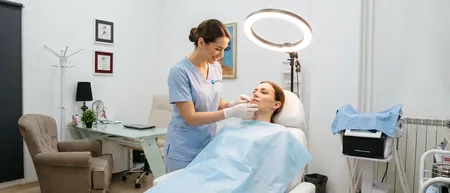
What is lip silicone removal?
Removal of silicone from the lips is a corrective procedure that removes from the lip tissue a permanent filler that the body does not break down. Unlike hyaluronic acid-based fillers, which break down on their own over time or can be dissolved with a special enzyme, silicone and other permanent materials remain in the tissue and can provoke a reaction in the surrounding area — hardening, nodules (granulomas) or an uneven lip shape.
Since such material cannot be dissolved, it is removed in a targeted way, using a surgical or combined approach, depending on how much there is, how it is distributed and whether it has already formed nodules. The aim of the procedure is to remove as much of the material and the accompanying changes as possible, while preserving as much healthy lip tissue as possible.
At Medical Time, lip silicone removal begins with a careful assessment of the condition of the lips, because every case is different — from the amount and type of material to the degree of tissue reaction. A realistic goal is always defined at the consultation, with dignity and without promises that cannot be kept, since with permanent fillers complete removal cannot always be guaranteed.
Who is removal of silicone from the lips for?
Lip silicone removal is intended for people who previously had a permanent, non-absorbable filler injected into their lips and who as a result have complaints or are dissatisfied with the appearance. The decision is made after a consultation, at which the doctor assesses the condition of the tissue and the possibilities for removal.
Removal of a permanent filler is most often recommended when one of the following reasons is present:
- palpable nodules, hardening or granulomas in the lips
- an uneven, deformed or asymmetrical lip shape
- a feeling of tension, discomfort or pain in the lip area
- signs of inflammation, migration of the material or recurring tissue reactions
- a wish to restore a more natural and softer appearance to the lips
- dissatisfaction with the result of a previously placed permanent filler
How removal of silicone from the lips is performed
The method of removal is adapted to the findings. When the material is clearly localised or has formed nodules, targeted surgical removal is carried out through small incisions on the inner side of the lip, so that any marks remain hidden. The surgeon carefully separates and removes the filler and the altered tissue, while preserving the healthy structures of the lip.
When the material is dispersed through the tissue, complete removal in a single act is not always possible, so the procedure is planned realistically — sometimes in several steps — with the aim of removing as much as possible and reducing complaints and deformity. The doctor explains in advance what can realistically be achieved.
The procedure is performed under sterile conditions, with appropriate anaesthesia and a careful technique, in order to preserve the shape and function of the lips. After removal, a later fine correction of the shape is also planned if needed, once the tissue has healed.
Preparing for the procedure
Preparation begins with a detailed consultation, at which the doctor assesses the type and amount of material and the condition of the tissue. Basic tests are done if needed, and if possible it is helpful to bring information about when and which filler was previously injected.
So that the procedure is safe and recovery calmer, it is important to follow the advice below:
- inform the doctor of all medications, especially blood thinners
- report chronic conditions, previous reactions and allergies to medications and anaesthetics
- if you have information about a previously placed filler, bring it for the doctor to see
- avoid alcohol and preparations that affect blood clotting before the procedure
- do not plan the procedure during a period of active inflammation or a herpes outbreak on the lips, which the doctor decides on
- arrange a quiet day after the procedure and follow the care instructions
Course of the procedure, anaesthesia and duration
The procedure is most often performed under local anaesthesia, so the lip area is completely numb and the patient is awake and free of pain. For more extensive removals or at the patient's request, mild sedation can be added, which the doctor and, if needed, an anaesthesiologist decide on.
The duration depends on the amount of material and whether it is localised or dispersed — from a shorter procedure to a longer, more careful removal. Since this is a delicate area, precision and preservation of healthy tissue are given priority over speed.
For most patients this is an outpatient procedure after which you go home the same day, with clear written care instructions and follow-up appointments.
Recovery after lip silicone removal
In the first days, swelling, tenderness and possible bruising of the lips are usual and subside gradually. The lips are tight and sensitive to touch at first, so rest, gentle cooling and care according to the doctor's instructions are recommended. Pain is most often mild and well controlled.
So that healing proceeds calmly and the result is nicer, it is important to follow the doctor's instructions:
- in the first days eat softer food and avoid hot and spicy dishes
- maintain oral hygiene and care according to the doctor's instructions
- avoid pressure on the lips, intense training and the sauna while recovery lasts
- attend follow-up appointments and, if placed, suture removal
- the final appearance of the lips is visible once the swelling has fully subsided, over the following weeks
- if a later correction of the shape is planned, it is done only after the tissue has fully healed
Possible risks and realistic expectations
Removal of a permanent filler is a useful and, in experienced hands, safe procedure, but it is important to have realistic expectations. Since the material is permanent and may be dispersed through the tissue, complete removal cannot always be guaranteed, and the aim is to remove as much as possible and to reduce complaints.
Transient effects are the most common, while more serious complications are rare:
- swelling, bruising and transient tenderness of the lips
- possible asymmetry or a need for a later correction of the shape
- scar tissue at the site of earlier changes, particularly with pronounced granulomas
- rarely: infection or slower healing
- careful assessment and a realistic plan in advance reduce the risk and disappointment with the result
Why entrust silicone removal to the Medical Time hospital
Removing a permanent filler from the lips requires experience, patience and an honest conversation about what can realistically be achieved. At Medical Time we approach the procedure carefully, assessing each case individually and using a technique that preserves healthy lip tissue.
Before the procedure we clearly explain the possibilities and limits of removal, with dignity and without promises that cannot be kept. After the procedure we remain available for follow-ups and, if needed, for planning a later fine correction of the shape.
- an experienced team of plastic surgeons and a careful, precise technique
- an individual assessment of the type and amount of material before the procedure
- an honest conversation about realistic expectations, without sensationalism
- sterile conditions and high safety standards
- discreetly placed incisions and care for the natural appearance of the lips
- follow-ups and support throughout recovery
Price — Removal of silicone from the lips
The price of lip silicone removal is determined after a consultation, as it depends on the amount and distribution of the material, the presence of nodules or granulomas and the extent of the procedure. Since every case is different, an exact estimate is given only once the doctor has examined the lips.
- Consultation and assessment of the lip condition
- Removal of a localised deposit of silicone / permanent filler
- Removal of lip nodules and granulomas
- Subsequent correction of the lip shape (if needed)
For an individual assessment and appointment, call 062-399-888.
Frequently asked questions about removal of silicone from the lips
Hyaluronic acid-based fillers can be dissolved with a special enzyme, but silicone and other permanent fillers cannot — the body does not break them down. That is why they are removed in a targeted way, using a surgical or combined approach.
When the material is localised, removal is most often very successful. If it is dispersed through the tissue, complete removal cannot always be guaranteed, so the aim is to remove as much as possible and reduce complaints. A realistic plan is agreed at the consultation.
The procedure is performed under local anaesthesia, so the lip area is numb and you feel no pain during removal. Afterwards, mild tenderness and swelling are possible and are well controlled.
The very aim of the procedure is to restore a more natural and softer appearance to the lips. In some cases a later fine correction of the shape is needed, which is done after the tissue has fully healed.
Swelling and tenderness are most pronounced in the first days and subside gradually, and the final appearance of the lips is visible once the swelling has fully settled, over the following weeks.
The incisions are made on the inner side of the lip whenever possible, so any marks are discreet. With pronounced granulomas, scar tissue is possible, which the doctor discusses with you in advance.
You book a consultation and appointment by calling 062-399-888. At the examination the doctor assesses the condition of the lips, explains the possibilities for removal and gives a price estimate.