

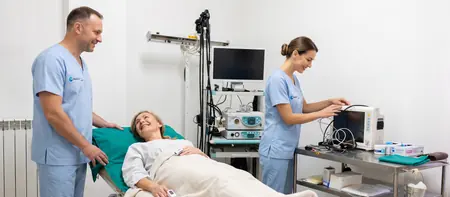
What a combined gastroscopy and colonoscopy means
Gastroscopy examines the upper digestive tract: the esophagus, the stomach and the first part of the small intestine. Colonoscopy examines the large bowel and the rectum. In a combined procedure the two exams are done one after the other, under a single anesthetic.
For you this means one day off, one fast and one wake-up. Bowel preparation is done only once, and the doctor gets a picture of the whole digestive tract that an endoscope can reach on the same day.
The combination makes sense when symptoms could come from either the upper or the lower gut. Whether you need both exams is decided by the gastroenterologist, based on your symptoms, blood results and earlier tests.
When a doctor suggests both exams at once
Some symptoms do not show clearly where the problem comes from. The doctor then looks at both the upper and the lower gut so that the source is not missed. The most common reasons are:
- iron deficiency anemia without a clear cause
- black stools, blood in the stool or a positive test for hidden blood
- weight loss you did not intend
- long-lasting abdominal pain, bloating or a change in bowel habits
- follow-up after earlier polyp removal or treatment of a bowel disease
What the anesthesia is like and whether it hurts
An exam under anesthesia does not hurt. The anesthesiologist gives you a medicine through a vein that brings on a short, deep sleep. During both exams you do not feel the camera, the air in the bowel or pressure in the abdomen.
The anesthesia is short and adjusted to the length of the exam. The anesthesiologist monitors your pulse, blood pressure, breathing and oxygen level the whole time. You keep breathing on your own, without a tube in the windpipe.
Before the exam you talk to the anesthesiologist about your illnesses, medicines and allergies. If you have heart or lung disease or sleep apnea, mention it when booking, because the anesthesia plan depends on it.
Preparing for gastroscopy and colonoscopy
Preparation is the same as for colonoscopy alone, because both the stomach and the bowel have to be empty. With your appointment you receive written bowel preparation instructions with exact times for the laxative.
In short, preparation consists of these steps:
- for two to three days before, no fruit with seeds, wholegrain bread or nuts
- the day before, only clear fluids and the laxative as instructed
- no food for at least 6 hours and no fluids for 2 hours before the exam
- the doctor tells you in advance what to do with blood thinners and diabetes medicines
- come with someone, because you must not drive after anesthesia
How long gastroscopy and colonoscopy take
Gastroscopy usually takes 5 to 15 minutes and colonoscopy 20 to 40 minutes. Together the two exams most often take less than an hour, while you are asleep.
Gastroscopy through the mouth is usually done first, followed by colonoscopy through the rectum. You lie on your left side. If the doctor sees a polyp, it can be removed during the same exam, and suspicious tissue is sent for histopathology.
With arrival, the talk with the doctors, the exams and waking up, expect to spend several hours in the hospital. Plan the whole day as free.
After the exam: waking up, results and recovery
Waking up is quick. Most patients do not remember the exam. For a few hours you may feel bloated from air in the bowel and have a slightly scratchy throat, which settles on its own.
After you wake up the doctor tells you what was seen, and you receive the written report the same day. If a tissue sample was taken, the histopathology result arrives in the following days, and the images are stored digitally.
You can eat light food once you are fully awake. Do not drive or make important decisions that day. If you develop severe abdominal pain, a high fever or heavy bleeding, call emergency services or contact a doctor right away.
Safety and when the exam is postponed
Gastroscopy and colonoscopy are routine exams, and serious complications are rare. Bleeding after polyp removal happens occasionally, and damage to the bowel wall is even rarer.
The exam is postponed if the bowel is not well cleaned, if you have not fasted or if your health is unstable. The gastroenterologist and the anesthesiologist decide after talking with you.
Cost of gastroscopy and colonoscopy under anesthesia
Gastroscopy under anesthesia costs 32,000 RSD and colonoscopy under anesthesia 39,000 RSD. Both can be done in the same appointment, and we confirm the price of the combination when you book, according to the exam plan.
Polyp removal and histopathology of a sample are not always needed, so the doctor will tell you whether and how they are charged.
- Gastroscopy under anesthesia
- Colonoscopy under anesthesia
- Gastroscopy and colonoscopy in one appointment
For an appointment call 062-399-888.
Questions about gastroscopy and colonoscopy under anesthesia
Separately, gastroscopy under anesthesia costs 32,000 RSD and colonoscopy under anesthesia 39,000 RSD. We confirm the price for both in one appointment when you book on 062-399-888.
Yes. The two exams are done one after the other under the same anesthetic. Bowel preparation and fasting are done only once.
No. You sleep during the anesthesia and do not feel the exam. After waking you may feel bloated and have a slightly scratchy throat, which pass within a few hours.
The exams together usually take less than an hour. With arrival, the talk with the doctors and waking up, you are in the hospital for several hours.
Preparation is the same as for colonoscopy: a few days of food without seeds, clear fluids and a laxative the day before, and you arrive fasting. Written instructions come with your appointment.
No. You must not drive on the day of anesthesia, so come and leave with someone.
Most patients say the hardest part is the bowel preparation, not the exam itself. The exam is usually not remembered and waking up is calm.
After you wake up the doctor tells you what was seen, and you get the written report the same day. The result of any tissue analysis arrives in the following days.
Related pages
Related exams and doctors